Posts

Showing posts with the label Famine

Horn Of Africa Crisis May Last Into Summer

Image
06 December 2011 London (Reuters) — The crisis in the Horn of Africa which has left more than 13 million people at risk of starvation is said to continue into the spring, and possibly the summer. The crisis, triggered by the worst drought in decades, has affected Somalia, Ethiopia, Kenya, and Djibouti. Kristalina Georgieva, European Humanitarian Aid Commissioner, said the Sahel region faces very dramatic hunger next year and feared some countries there are ignoring the problem. Georgieva said she was extremely concerned about the famine’s long-term repercussions on the region because of the vast numbers of Somalis who had fled to refugee camps in Kenya, Ethiopia and Yemen. Instability in Somalia meant they were unlikely to return home once the crisis was over. The commissioner said there were probably 400,000 to 500,000 Somalis in Yemen, the Arab world’s poorest country, plagued by unrest, and that the flow of refugees from poor country to poor country has stability and security impl...

Somali Famine Victims Afraid To Return Home

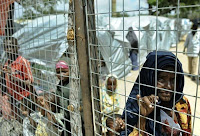
Image
23 November 2011 Dolo (Associated Press ) — Although Somalia is beginning a slow recovery from famine, many Somali women fear re turning home because of hard-line Islamic militants stalking the country, and of being unable to feed themselves and their children. According to a Somali United Nations worker, many of the men at the refugee camps are returning home to plant crops, but many women say they will not join them because of the security that the camps provide. SOURCE: Many Somali Famine Victims Afraid To Return Home http://www.chron.com/news/article/Many-Somali-famine-victims-afraid-to-return-home-2282563.php RELIABILITY : 9

Somali Famine Ceases In Some Areas

Image
18 November 2011 Johannesburg (Los Angeles Tim es) — Somalia’s hunger crisis has somewhat ceased, with the United Nations announcing that three of six famine regions were technically no longer in famine. These three regions, Bay, Bakool and Lower Shabelle remain in a critical situation and it is expected that 250,000 people will die in southern Somalia because of the crisis. The other three areas, Middle Shabelle, Afgoye and Mogadishu will remain in famine until at least the end of the year. According to aid agencies, all of southern Somalia is in an acute situation and death rates are still high. Although the global acute nutrition and crude death rates have declined in some areas, malnutrition rates continue to remain above the famine threshold levels in a large part of southern Somalia. Child death rates remain above crisis levels in several areas as well Somalia’s famine is the worst in the world and the worst in Somalia since its last famine in 1991. SOURCE: Expert: Somal...

Famine Victims May Be Beyond Aid

Image
05 November 2011 Nairobi (The Seattle Times) — Half a million victims of famine in southern Somalia, trapped inside territory contro lled by the rebel militia al-Shabaab, may be largely beyond the help of Western agencies, Somalia expert Ken Menkhaus writes in a paper for the Enough Project. Access to the south, the region hardest hit by famine, remains difficult and dangerous for humanitarian agencies, with some banned from operating in the south, and myriad rules and bureaucratic requirements for those allowed access. Al-Shabaab’s handling of the famine amounts to crimes against humanity, terrorizing people into submission, confiscating their produce and taxing them into poverty in the name of jihad. As they now starve, al-Shabaab denies them even the opportunity to migrate in search of food. Menkhaus says that the bizarre and extremist behavior of al-Shabaab, has made it unclear whether the West and the United Nations can realistically do much to help the 500,000 famine ...

Human Trafficking On The Rise In Horn Of Africa

Image
02 November 2011 London (The Guardian) — Natural disasters, armed conflict and famine devastating the Horn of Africa have caused an increase in human smuggling and trafficking in the region. Women and children, most fleeing drought and conflict in Somalia, Rwanda, Tanzania, Ethiopia, and Uganda are being trafficked into Kenya and sold into prostitution, domestic labor, or cattle herding with a promise of a better life. Womankind Kenya , an NGO based in Kenya’s North Eastern Province, estimates that 50 young girls are trafficked or smuggled to Nairobi each week. The bulk of the distribution of girls to different parts of Kenya and across the world occurs from the central market in Nairobi. The International Organization for Migration estimates that more than 10,000 people are trafficked into Kenya’s Coast province each year. In efforts to curb trafficking, President Mwai Kibaki signed The Counter Trafficking in Persons Act in 2010 . Under the law, trafficking in persons is now cr...

U.S. Increases Food Aid To Horn Of Africa

Image
25 OCTOBER 2011 Reuters (Washington)-- The United States is increasing food aid to drought-hit and strife-torn Horn of Africa nations. U.S. Secretary of State, Hillary Clinton stated that the U.S. is providing $100 million for food and humanitarian assistance in addition to the $650 million that has already been donated. According to Clinton, tens of thousands of people, most being children, have already died, and as many as 750,000 people are currently experiencing famine-level conditions. In addition, she stated that al-Shabaab continues to curtail access for relief workers and denying people food and medical aid in Somalia. She believes the additional U.S. support will help relief workers reach more people well into next year. RELIABILITY: 9 SOURCE: U.S. Increases Food Aid To Horn Of Africa http://af.reuters.com/article/topNews/idAFJOE79O00F20111025

Somalia’s Sexual Violence Largely Ignored

Image
11 October 2011 London (The Guardian) —While agencies bring food and medical aid to famine-hit Somalia, escalating sexual violence is treated as a low priority. This is in part due to the difficulty for large foreign-aid organizations to access the women in need, those living in al-Shabaab -controlled internally displaced persons (IDP) camps. For sexual predators, famine and vulnerability equals opportunity. A recent United Nations assessment reported that cases of rape have quadrupled during the famine. If a victim of rape dares to complain, she is accused of promiscuity or “speaking against the brotherhood,” both crimes punishable by beheading or stoning. Solutions outside the traditional big-aid model have proven to be effective. Grassroots Somali leader Fartun Adan opened Sister Somalia , a rape crisis center inside Mogadishu’s government-controlled safe zone. She has developed a malleable direct-aid structure informed by local context, catering to victims’ specific needs. SOURCE: ...